Thekenschaaf
The brewhouse command post
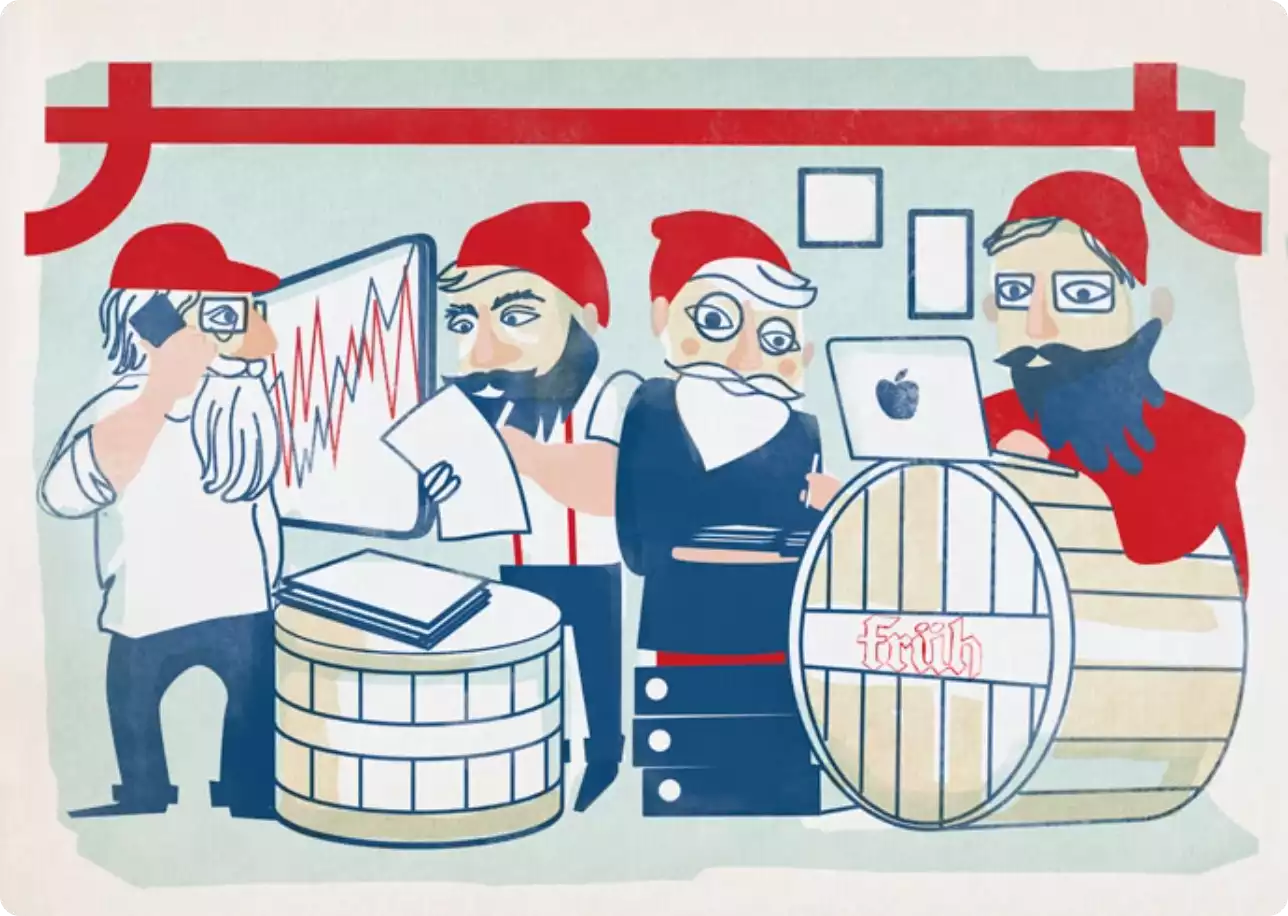
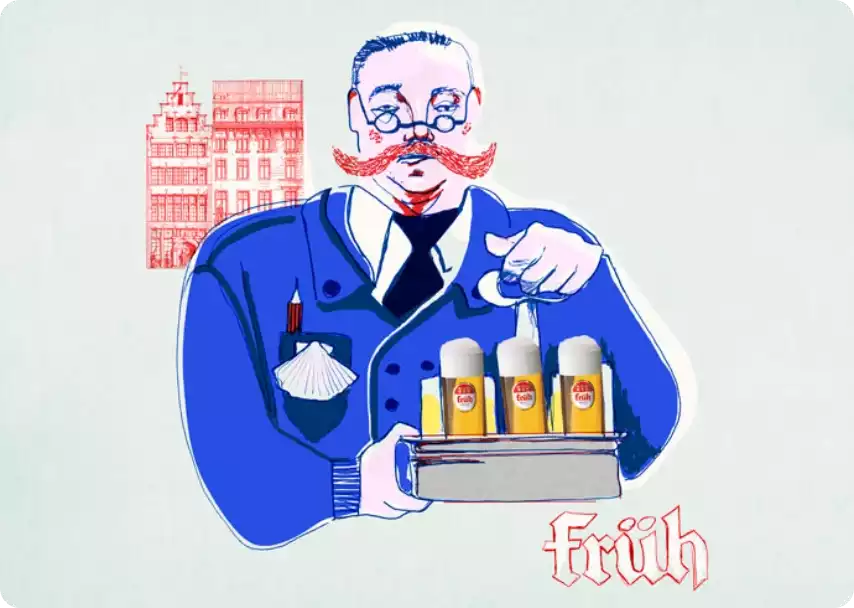
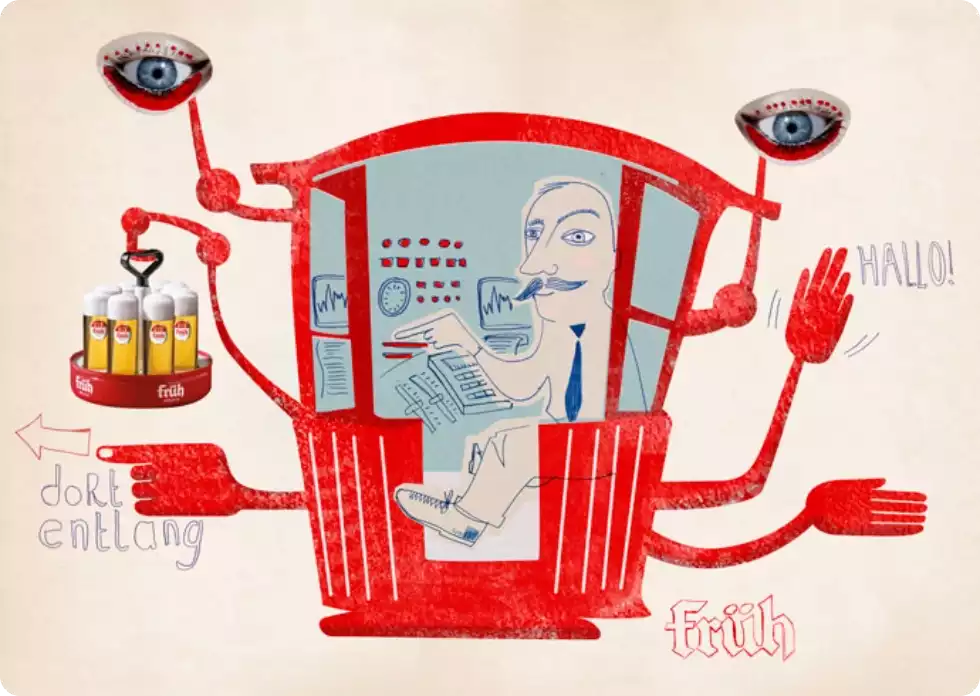
In the past, Cologne´s beer halls and brewhouses did not have bars or counters. Guests enjoyed their Kölsch at the table, while the Köbes brought the beer straight to them. Instead of a bar, there was the Thekenschaaf, which means “cabinet” in Kölsch. It was also known as the Beichtstuhl, or “confessional”, and sometimes as the Kontörchen, a small office. The Thekenschaaf was a wooden booth that opened into the brewhouse and served as the landlord´s base. From there, he settled accounts with the Köbesse, checked the food and kept an eye on everything going on around him. The name Beichtsuhl was used when two people sat opposite to each other, almost like in a church confessional. Every Thekenschaaf also had a glass panel facing the hallway, so the landlord could deal with suppliers and delivery drivers without leaving his booth. The hallway had another purpose too. People who were not allowed into the brewhouse, for exapmle because of certain professions or because of their smell, could still enjoy their Kölsch there while standing. Today, the Thekenschaaf can still be found in many Cologne brewhouses. It is often used as a special seating area for guests who appreciate tarditional Cologne beer culture.
You might also like

Thekenschaaf
The brewhouse command post
In the past, Cologne´s beer halls and brewhouses did not have bars or counters. Guests enjoyed their Kölsch at the table, while the Köbes brought the beer straight to them. Instead of a bar, there was the Thekenschaaf, which means “cabinet” in Kölsch. It was also known as the Beichtstuhl, or “confessional”, and sometimes as the Kontörchen, a small office. The Thekenschaaf was a wooden booth that opened into the brewhouse and served as the landlord´s base. From there, he settled accounts with the Köbesse, checked the food and kept an eye on everything going on around him. The name Beichtsuhl was used when two people sat opposite to each other, almost like in a church confessional. Every Thekenschaaf also had a glass panel facing the hallway, so the landlord could deal with suppliers and delivery drivers without leaving his booth. The hallway had another purpose too. People who were not allowed into the brewhouse, for exapmle because of certain professions or because of their smell, could still enjoy their Kölsch there while standing. Today, the Thekenschaaf can still be found in many Cologne brewhouses. It is often used as a special seating area for guests who appreciate tarditional Cologne beer culture.